

Travel Tips
Travel safety in 2026 goes beyond choosing safe destinations, encompassing the safest ways to travel, AI-driven alerts, and proactive protection that helps travelers prepare for a more complex global landscape.
Christine Raimer, Digital Commerce Leader
·Published on January 30th, 2026
Travel safety trends in 2026 show that while travel remains statistically safe, the factors influencing traveler safety have grown more complex. As trips become more digitally connected and shaped by world events, safety now involves digital hygiene, climate awareness, and geopolitical savvy supported by thoughtful planning and preparation.
As an established travel assistance membership plan, Emergency Assistance Plus® (EA+®) has extensive experience supporting travelers during unforeseen medical emergencies.
We spoke with Bryanna Moore, Senior Product Manager, Dr. Michelle Nathan, MD FAAEM, Chief Medical Officer, and Johanna Hartnett, Global Security Services Manager, who are key experts in travel safety at EA+ to gain insights on the trends that impacted travelers in 2024 and what’s on the horizon for 2025.
Although late 2024 and early 2025 saw increased media coverage of airplane accidents, air travel remains the safest mode of transportation compared to road, rail, and maritime travel, such as cruising.
In 2024, the global aviation accident rate was 1.13 per million flights (one accident per approximately 880,000 flights). This is an improvement over the five-year average of 1.25 but a slight increase from the 1.09 recorded in 2023. This increase may be linked to continued growth in global air travel, with passenger demand rising 6.6% year over year in late 2025.
Media attention has also followed a rise in drone sightings near airports worldwide in 2025, which led to temporary runway closures, delays, and heightened safety protocols, even though these incidents rarely resulted in accidents.
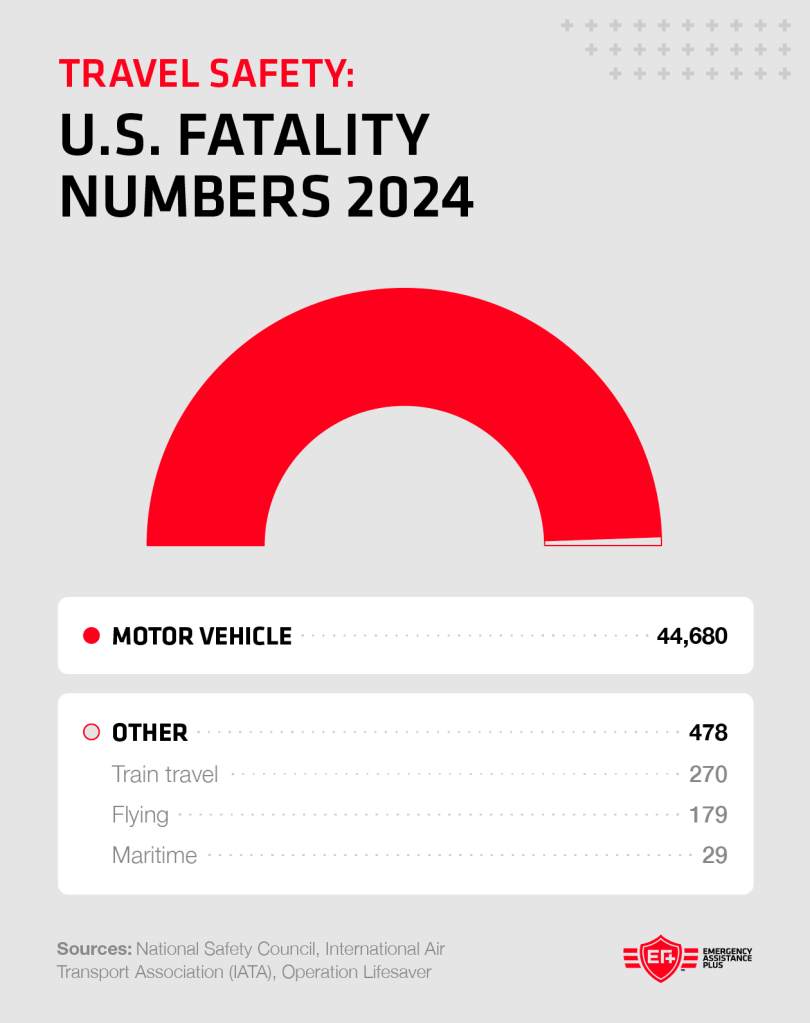
This data underscores the relative safety of air travel, but traveler concern remains a factor, as Senior Product Manager Bryanna Moore states:
“Travelers are increasingly researching airline safety records before booking flights, and more people are purchasing coverage that includes emergency evacuation and flight cancellation.”
For peace of mind regarding medical emergencies and emergency evacuation, look into travel assistance plans to address costs, or if you’re worried about flight disruptions, look into flight insurance.
Compare plansWith a current value of $482 billion in 2024, the solo travel industry is experiencing significant growth, projected at a 14% CAGR between 2025 and 2030. Notably, women are a key demographic in this market, accounting for 54% of solo travelers.
This strong female presence in the solo travel market is further reflected in traveler sentiment, with 59% of female solo travelers feeling safe traveling alone, possibly due to access to safety resources, growing empowerment, and better travel planning.
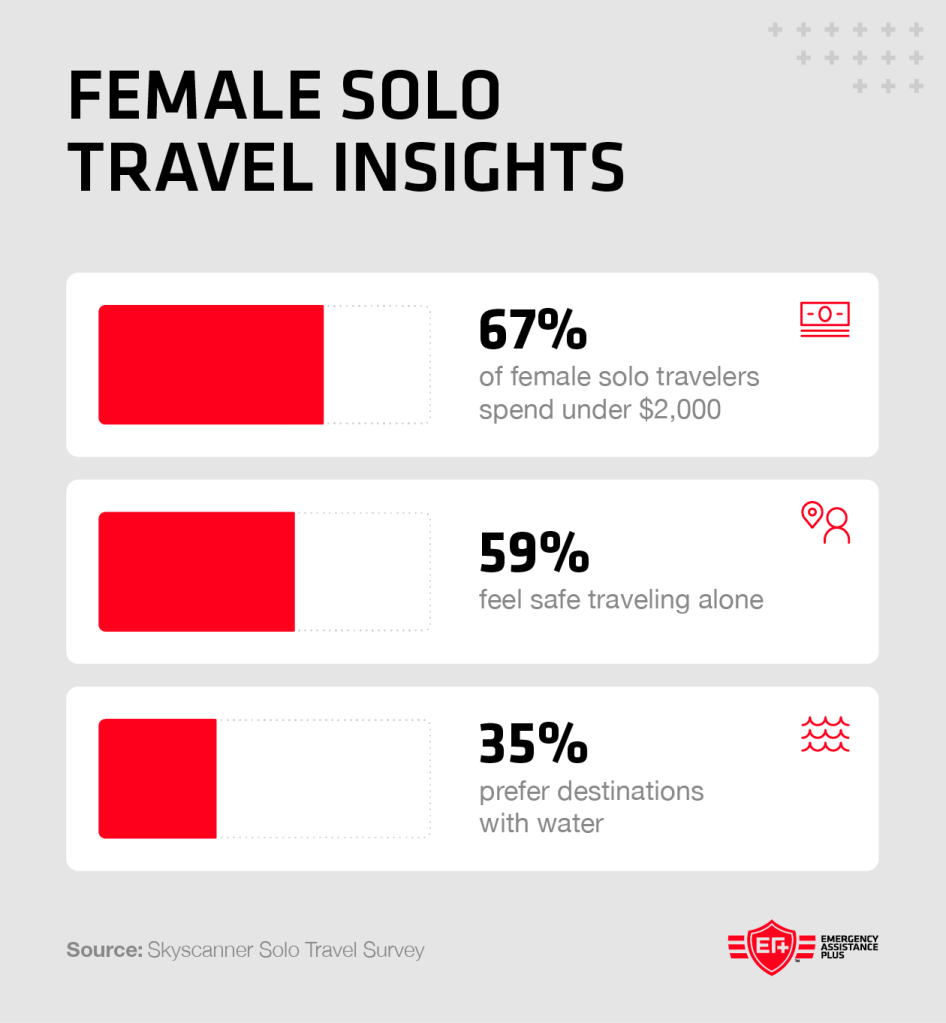
Outside of solo travel, the rise of female-friendly accommodations, tour groups, and trends like van life offer control and independence, which adds to this sense of security. However, maintaining situational awareness is crucial, especially when driving alone. Particularly in snowy conditions, travelers should actively seek and apply winter driving tips to stay safe.
While solo travel demonstrates a positive perception of safety, it’s important to acknowledge broader trends in traveler risk mitigation. Moving into 2026, feeling safe while traveling increasingly reflects confidence in preparation and access to information, rather than a belief that risks no longer exist. As Moore states:
“Conflicts in the Middle East, Ukraine, and Taiwan have increased risks for travelers, prompting greater caution around geopolitical tensions, natural disasters, and even cyber threats that can disrupt travel plans.
As a resource, the U.S. Department of the Treasury offers a comprehensive list of sanctions programs and country information to help travelers stay informed if they are planning on traveling abroad.”
“There’s growing interest in travel assistance and insurance plans, with more travelers purchasing [protection] that includes emergency evacuation, trip cancellation, and protection against disruptions or health risks,” says Moore.
Recent reporting on global travel disruptions indicates that traveler demand for trip protection increased in early 2025, with travel insurance quote requests up at least 32% year over year and purchases of more flexible protection options rising by more than 30%.
The rising interest in travel protection is reflected in EA+’s membership trends. From 2021 to 2024, membership in travel assistance programs grew overall. The steady growth over time reinforces travelers’ continued prioritization of protection amid escalating global health risks.
As concerns over travel disruptions and health risks grow, more travelers are securing protection for eventualities like flight cancellations or medical emergencies. This is reflected in current travel insurance statistics, including an NMSC report that indicated 36% of travel protection is for medical coverage.
In 2024, 15 norovirus outbreaks on cruise ships led to 1,894 passengers and 245 crew members becoming sick. Similar gastrointestinal illness outbreaks continued to be reported into 2025, coinciding with a global rise in illness reports of influenza, RSV, and other infectious diseases.
This broader trend has strained healthcare systems, a pattern reflected in our internal data. From January to March 2024, illness-related membership cases surged by 26%.
Looking ahead, this issue of illness-related travel disruptions is likely to persist in 2026 and beyond, impacting how travelers prepare for trips and what they prioritize. As Dr. Michelle Nathan, MD FAAEM, Chief Medical Officer, states:
“Recent outbreaks—such as Mpox globally, measles in Europe and the U.S., and yellow fever in parts of the Americas—have heightened traveler awareness around health risks.
As a result, more travelers are engaging in pre-trip planning, asking about available medical care, medications, and health services at their destinations. It’s essential to research your destination for disease concerns, vaccination requirements, and local resources for medical care before you go.”
Travel assistance plays a useful role in supporting travelers affected by medical emergencies abroad, including hospitalization due to severe outbreaks like norovirus or general illnesses like traveler’s diarrhea. It helps protect against medical expenses, evacuation (if needed), and logistical support for managing cancellations or delays due to health issues.
Learn moreHumetrix’s AI-powered app at the Paris 2024 Olympics demonstrated the effectiveness of AI language translation in emergency care. By translating patient data into 25 languages, the app ensured rapid communication, optimized resource use, and provided equitable medical assistance to attendees.
This aligns with a JAMIA case study, which, while acknowledging AI translation technology’s ongoing development, highlights the potential to enhance face-to-face communication, improve care quality, and address health disparities.
Both cases underscore the importance of utilizing resources that bridge language barriers to optimize patient care in diverse settings. Moving into 2026, AI-powered tools are being applied more broadly across emergency travel scenarios to support faster decision-making and coordination during disruptions.
Beyond language translation, AI technology is being used to enhance travel safety through tools such as real-time location sharing, AI-assisted triage, and automated check-ins. These tools can also deliver safety alerts that help travelers and support teams respond more quickly when something goes wrong.
This use of technology could increase traveler control and security in 2026 and beyond, as Global Security Services Manager Johanna Hartnett states:
“Real-time communication capabilities allow travelers to immediately alert management in case of an emergency, while management can track their progress through the itinerary. This technology has significantly reduced risk landscapes and increased comfort for travelers in a variety of situations.
For example, it can assist a study-abroad student walking home alone in a new city or a caravan traveling through the SAHEL.”
Negotiating airport and border security is becoming easier as automated systems reduce friction at checkpoints. In the U.S., biometric identity verification allows travelers to move through security using facial recognition. Internationally, more countries are adopting contactless border controls to reduce wait times and congestion.
As travel becomes more digitally driven, security increasingly extends beyond physical checkpoints. Travelers now rely heavily on mobile devices for identification, boarding passes, payments, and accommodations, making digital vigilance essential. At the same time, AI-powered scams and fraudulent booking platforms are becoming more sophisticated.
Public Wi-Fi networks and QR codes in busy hubs such as airports are increasingly exploited for targeted phishing and data theft. As travel systems become smarter, staying secure now depends on pairing seamless technology with proactive habits, including verifying digital communications and safeguarding devices while abroad.
As the global security landscape remains unpredictable, traveler perceptions of safety are shaped by stability, infrastructure reliability, and access to essential services.
In 2026, travelers consistently find Canada, Japan, New Zealand, Portugal, and Iceland exceptionally safe due to top-notch healthcare, effective governance, and low crime rates. Recent aviation safety data also highlights them as safe places to travel.
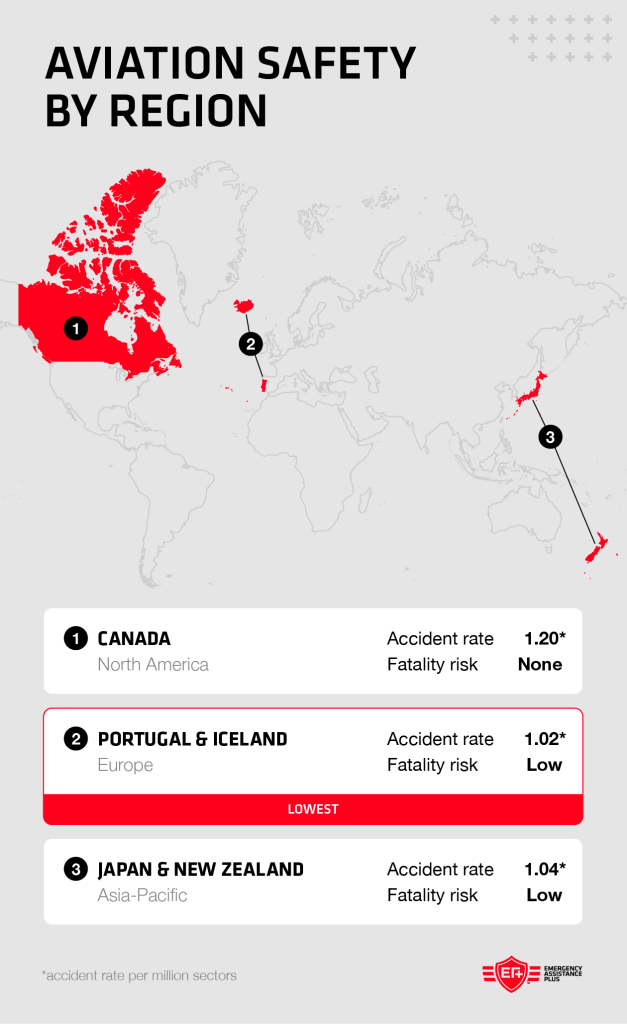
These five countries also align with the “coolcation” trend as travelers increasingly favor destinations with milder summer climates amid rising global heat events. Insights from Virtuoso’s 2026 Luxe Report reinforce this shift, noting growing demand for destinations that offer climate comfort, stability, and a sense of ease.
This search for security is also influencing accommodation choices when traveling. As Moore states:
“Travelers are increasingly seeking destinations and travel advisors who can offer more personalized and safer travel experiences for their families. Safety concerns have led many families to prefer all-inclusive resorts, private vacation rentals, and other accommodations that offer more controlled environments.”
Iceland is a Nordic island country known for its dramatic landscapes, including volcanoes, geysers, hot springs, and lava fields. Reykjavik, the capital and primary gateway for visitors, is widely regarded as one of the safest cities in the world. Iceland consistently ranks as one of the safest countries due to its low crime rate, strong social welfare system, and culture of trust.
Japan is an East Asian island nation known for its blend of traditional culture and advanced technology. Tokyo, one of the world’s largest metropolitan areas, is also among its safest major cities, supported by efficient public transportation, low crime rates, and strong emergency preparedness.
New Zealand is a South Pacific island nation recognized for its mountains, lakes, and dramatic coastlines, as well as its outdoor-focused travel experiences. It is widely regarded as a safe destination for travelers. Nearby Australia, particularly Perth, is often considered alongside New Zealand for its geographic isolation, infrastructure, and safety standards.
Portugal is a Southern European country celebrated for its rich history, vibrant culture, and picturesque coastal towns. It is also generally considered a very safe country for travelers.
Canada is a North American country known for its vast wilderness, diverse cities, and strong public services. Its political stability, healthcare system, and well-developed transportation infrastructure contribute to consistently high safety perceptions among travelers.
Several other countries also rank highly across global safety, peace, and quality-of-life measures. The table below highlights additional contenders frequently recognized for their stability and traveler-friendly environments.
| Country | Safety Index | Global Peace Index | Life Satisfaction |
| Singapore | 74% | Ranked #6 | 6.6/10 |
| Denmark | 77% | Ranked #8 | 7.5/10 |
| Norway | 72% | Ranked #32 | 7.3/10 |
| Switzerland | 75% | Ranked #5 | 7.2/10 |
| Austria | 71% | Ranked #4 | 7.1/10 |
The global travel industry has made a strong recovery since the impact of COVID-19. As tourism levels continue to rise, here are some key insights—some reflecting industry-wide trends, others specific to EA+, especially in areas like health and safety.
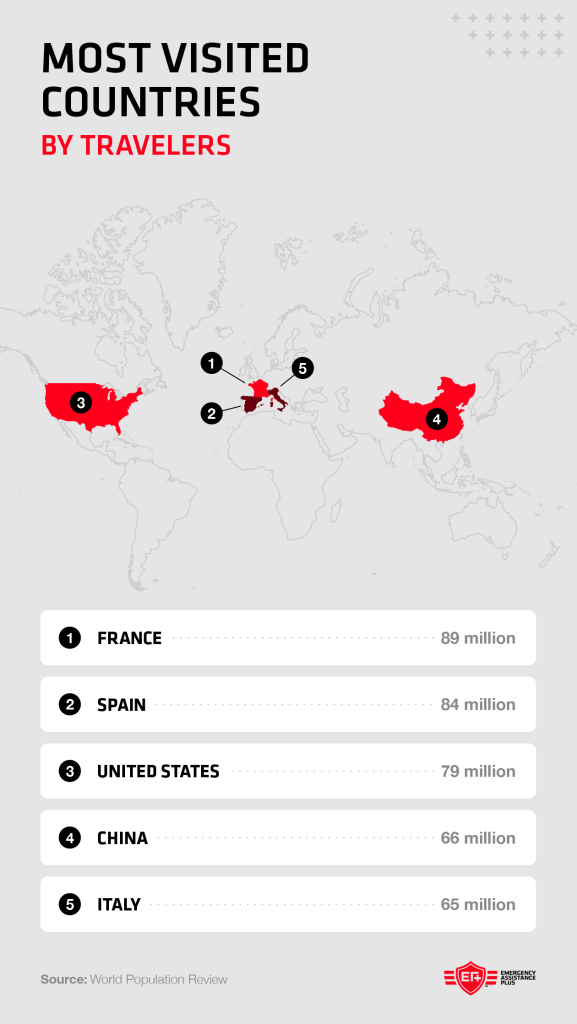
The travel industry is ever-evolving, with travel safety trends frequently changing. To lower accident risks and ensure a safe journey, travelers of all ages, including senior travelers, need to stay informed about their plans before and during their trip.
EA+ is a proactive annual travel assistance membership designed to assist you in a medical emergency. With safety risks varying by destination, having a reliable protection partner is essential for peace of mind, helping you feel safe no matter where you travel.
Enroll todayFirst-party data is collected from EA+ member cases, specifically focusing on date, type of incident, location of occurrence, transport details, and associated costs. This data is used to identify and support data trends related to accident, injury, death and other incident patterns, with a strong emphasis on maintaining client data privacy.
Costs represent the service-related expenses incurred during an incident, distinct from the annual membership fee, which includes access to those services when an incident occurs.
To determine the safest travel destinations, we analyzed crime rates, Global Peace Index ratings, and life satisfaction across numerous countries using data from the Global Peace Index, Organisation for Economic Co-operation and Development (OECD), and World Population Review. Countries were compared based on these factors, with each metric contributing to an overall understanding of safety for travel.
The four-tier U.S. travel advisory system helps travelers evaluate risks before visiting a country. Issued by the U.S. Department of State, these advisories assess safety concerns such as crime, terrorism, civil unrest, health risks, and natural disasters. They also identify the most dangerous countries to visit, guiding informed travel decisions.
The levels include:
The safest ways to travel around the world are commercial flights and train travel. Both have low accident rates and strict safety protocols.
Air travel is statistically the safest mode of transportation, with an exceptionally low accident rate per mile. This is largely attributed to rigorous safety standards, advancing technology, and extensive pilot training.
The safest places to go as a solo traveler are Iceland, closely followed by Japan and New Zealand, all known for their low crime rates, friendly locals, and safe environments.
AI helps improve traveler safety by delivering faster alerts based on real-time conditions. AI-powered systems analyze data such as weather events, transportation disruptions, health advisories, and security updates to notify travelers when risks change. These tools are used to provide:
Geopolitical conflicts primarily affect travel safety through logistical disruptions rather than direct threats to travelers. Ongoing tensions in regions such as Eastern Europe, the Middle East, and parts of Asia have led to airspace closures, flight rerouting, shifting visa rules, and short-notice advisories.
For most travelers, the key impact is increased uncertainty, making it important to monitor official guidance, remain flexible with plans, and prepare for potential delays or changes.
Christine leads the digital and online experiences for Emergency Assistance Plus (EA+) and strives to delight visitors with engaging content and intuitive design. Christine is an avid backpacker, having recently completed the Colorado Trail and can often be found road tripping around the U.S. in her camper van, exploring beautiful destinations. A longtime EA+ member herself, Christine feels confident when traveling to new locations, because she knows that she’ll be protected if a medical emergency occurred while away from home.


Travel Tips · January 7, 2026

Travel Tips · January 6, 2026

Travel Tips · January 5, 2026

Travel Tips · November 28, 2025

Travel Tips · November 26, 2025

Travel Tips · October 31, 2025
